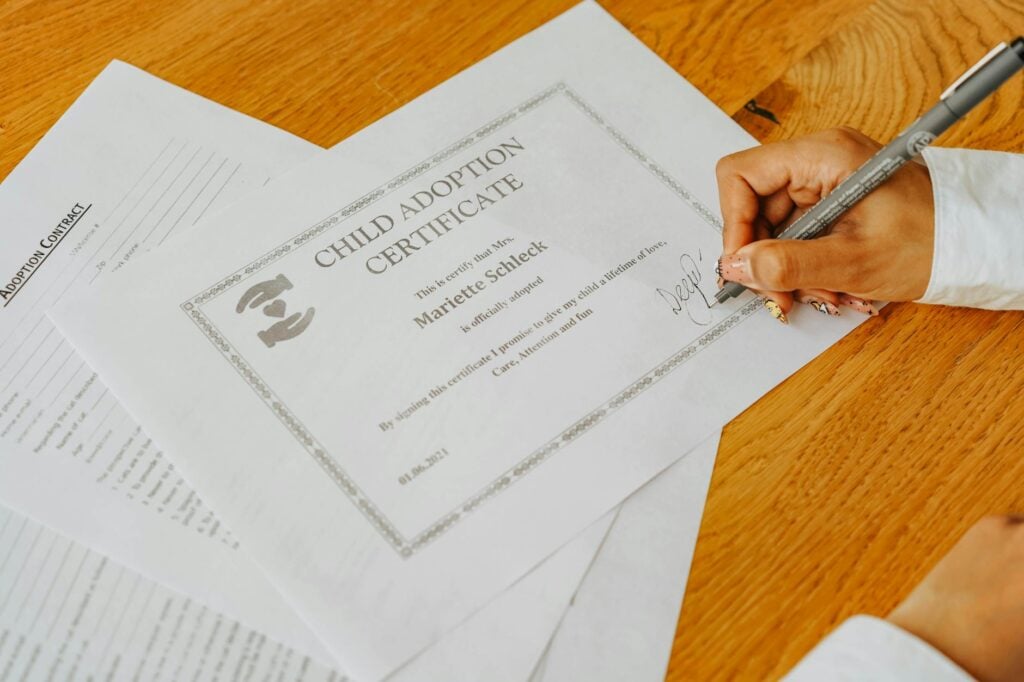
Stepparent adoption is one of the most meaningful legal steps a blended family can take. It creates a permanent legal parent-child relationship between a stepparent and a stepchild, granting the same rights and responsibilities as a biological parent. In Indiana, the process follows a clear legal framework, but it does require several important steps and in some cases a court hearing to terminate the rights of the other biological parent.
If you are a stepparent who wants to legally adopt your partner's child, here is what the process looks like in Indiana.
Step 1 – Confirm You Meet the Basic Eligibility Requirements
In Indiana, a stepparent may petition to adopt a stepchild if they are legally married to the child's custodial parent. The stepparent must be an adult and must be willing to assume full parental responsibility for the child.
Before the adoption can proceed, one important threshold question must be addressed first. What happens to the other biological parent's rights?
Step 2 – Address the Other Biological Parent's Rights
Indiana law requires that a child have no more than two legal parents. For a stepparent to adopt, the other biological parent's parental rights must either be voluntarily relinquished or terminated by a court.
Voluntary consent is the clearest path. If the other biological parent agrees to the adoption, they sign a formal consent to adoption document. The court will review that consent to confirm it was given voluntarily and with full understanding of its consequences. Once parental rights are relinquished, they are permanent. The biological parent loses all legal rights and obligations, including the right to parenting time and the obligation to pay child support.
When the other biological parent will not consent, the petitioning parent and stepparent must ask the court to involuntarily terminate parental rights. This is a more complex process and requires meeting specific legal grounds under Indiana law, such as abandonment, failure to support the child for at least one year, or a prior finding that the child is a Child in Need of Services (CHINS). More information about how Indiana courts approach adoption and termination of parental rights is available on the Ciyou and Associates website.
Step 3 – File the Adoption Petition
Once the consent issue is resolved, the stepparent files a Petition for Adoption with the probate court in the county where the child lives. The petition includes basic information about the child, the petitioning stepparent, and the custodial parent, along with documentation showing that the other biological parent's rights have been addressed.
The filing fee and required documents vary by county. An adoption attorney can make sure the petition is complete and correct before it is filed, which helps avoid delays.
Step 4 – Complete the Home Study (When Required)
Indiana generally requires a home study in adoption cases, but stepparent adoptions are sometimes exempt from or subject to a shorter version of this requirement depending on the circumstances. A home study involves a background check, interviews with the family, and an inspection of the home environment.
If a home study is required, the court will appoint a licensed investigator or social worker to conduct it and report back with a recommendation. This step is designed to confirm that the adoption is in the child's best interests.
Step 5 – Attend the Adoption Hearing
After the petition is filed and any required investigation is complete, the court schedules a hearing. Both the custodial parent and the stepparent attend, and in many cases the child is present as well.
At the hearing, the judge reviews the evidence, confirms that all legal requirements have been met, and determines whether the adoption is in the child's best interests. If the judge approves the adoption, a new birth certificate is issued listing the stepparent as the child's legal parent.
The entire process in Indiana typically takes several months from start to finish, depending on whether parental rights need to be contested and how quickly the court's schedule allows for a hearing.
You can learn more about adoption in Indiana and the parental rights framework at ciyoulaw.com/child-custody/
Frequently Asked Questions
Does the child need to consent to a stepparent adoption in Indiana?
Indiana courts generally consider the wishes of a child who is 14 years of age or older when deciding whether to approve a stepparent adoption. While the child's consent is not always legally required, a judge who hears that an older child opposes the adoption will factor that into the best interests analysis.
What happens to child support if the other biological parent's rights are terminated?
Once parental rights are terminated as part of a stepparent adoption, the biological parent's child support obligation ends. Going forward, the stepparent assumes full financial responsibility for the child. Existing child support arrears may still be collectible even after adoption depending on the specific circumstances.
Can a stepparent adoption be reversed after it is finalized?
An adoption that has been finalized in Indiana is very difficult to reverse. It is treated as permanent by law. If there are serious concerns about the circumstances of the adoption, such as fraud or coercion, an attorney can advise whether any legal options exist. Under ordinary circumstances, a finalized adoption stands.
Citations
- Indiana Code Title 31, Article 19. Adoption. https://iga.in.gov/laws/2023/ic/titles/31#31-19
- Indiana Department of Child Services. Adoption Resources. https://www.in.gov/dcs/adoption/
- Child Welfare Information Gateway. Consent to Adoption. https://www.childwelfare.gov/topics/adoption/laws/consent/