When a family law case reaches Indiana's Court of Appeals, most of the communication between lawyers and judges happens through written briefs. But in some cases, the court grants oral argument, giving attorneys the opportunity to speak directly to the judges, answer questions, and make a final case for why the lower court's ruling should be affirmed or reversed.
Oral arguments are not a retrial and they are not an opportunity to introduce new evidence or new legal theories. They are a focused conversation between appellate counsel and the judges about the legal issues already raised in the briefs. For many family law litigants, the idea of oral arguments can feel both hopeful and intimidating. Understanding what they are, when they happen, and how much they actually matter can help you and your attorney decide how to approach this stage of the process.
This guide explains how oral arguments work in Indiana family law appeals, when the Court of Appeals is likely to grant them, and what lawyers and their clients should expect when argument day arrives.
What Are Oral Arguments in an Indiana Appeal?
An oral argument is a scheduled hearing at the Indiana Court of Appeals during which each side's attorney speaks directly to a three-judge panel. The attorney for the appellant, the party challenging the lower court's ruling, typically goes first. The appellee's attorney responds. If the appellant wishes, they may reserve some time for rebuttal.
Each side is generally allocated a limited time, often 15 to 20 minutes per party, though complex cases may warrant more. The argument is not a speech or a monologue. The judges ask questions throughout, and answering those questions clearly and accurately is often the most important thing an attorney does during oral argument.
The purpose of oral argument is not to repeat everything in the brief. The judges will already have read the briefs before argument day. Oral argument is an opportunity to address the issues the judges find most significant, answer questions that the briefs did not fully resolve, and make a direct human impression on the people who will decide the case.
When Does the Indiana Court of Appeals Grant Oral Argument?
Oral argument in Indiana appeals is not automatic. Either party can request it, but the court has discretion to grant or deny the request. The Indiana Rules of Appellate Procedure allow parties to request oral argument by filing a separate motion, and the court may also order oral argument on its own initiative.
The Court of Appeals is more likely to grant oral argument when the case presents a novel legal question, when the record is complex, when there is a conflict in prior case law the court needs to resolve, or when the attorneys persuasively explain why argument would help the court. Routine appeals where the legal issues are well-settled are less likely to receive oral argument.
In family law specifically, oral argument is most common in cases involving substantial legal disputes about how the trial court applied the law, rather than purely factual disputes. Indiana appellate courts give significant deference to trial court findings of fact, so appeals that challenge only factual findings are less likely to lead to reversal and less likely to benefit from oral argument.
How Is the Request for Oral Argument Made in Indiana?
Under Indiana Appellate Rule 52, a party seeking oral argument must file a written request no later than the time the final brief is filed. The request should state why oral argument would be helpful to the court's resolution of the appeal. A generic request is unlikely to succeed. Attorneys who explain specifically what issues they plan to address and why a discussion with the court would add value are more persuasive.
The court can also order oral argument without a request from either party. This sometimes happens when judges reviewing the case identify a particularly difficult legal question or when the case has implications beyond the individual parties involved.
What Happens on the Day of Oral Argument?
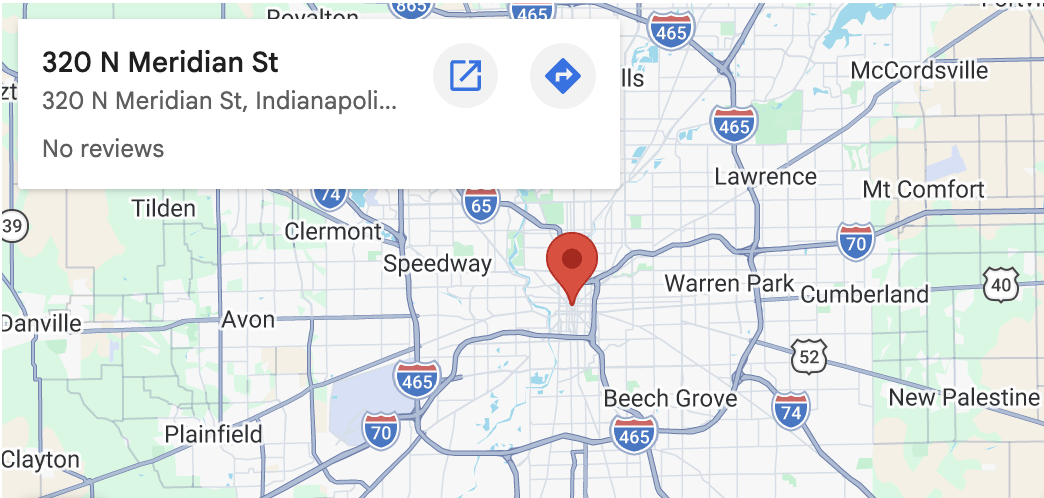
Oral arguments at the Indiana Court of Appeals are conducted at the Indiana Statehouse in Indianapolis, though the court also travels periodically to conduct arguments at law schools and courthouses around the state as part of its outreach program.
When the case is called, both attorneys approach the podium and identify themselves for the record. The appellant's attorney begins and is typically interrupted almost immediately by questions from the panel. Indiana appellate judges are active questioners and oral argument in Indiana tends to be a rapid, interactive exchange rather than a formal presentation.
After the appellee's argument, the appellant may use any rebuttal time they reserved. Rebuttal is limited to responding to what the appellee said. It is not an opportunity to raise new points or revisit arguments already made in the opening portion of argument.
How Much Does Oral Argument Influence the Outcome of a Family Law Appeal?
The honest answer is that it depends on the case. Empirical studies of appellate advocacy suggest that oral argument rarely changes the ultimate outcome in cases where one side clearly has the better legal position based on the briefs. But in close cases, oral argument can matter a great deal.
| Factor | Impact on Oral Argument Value |
|---|---|
| Close legal question with no clear precedent | High — oral argument may be decisive |
| Complex record requiring clarification | High — judges use argument to work through facts |
| Novel statutory interpretation issue | High — courts use argument to test their reasoning |
| Well-settled law applied to undisputed facts | Low — brief likely controls outcome |
| Pure factual credibility challenge | Low — appellate deference limits review |
What oral argument always provides, regardless of outcome, is a chance for attorneys to understand what the judges are thinking. The questions judges ask during argument often reveal which issues concern them most and which arguments they find most persuasive. A skilled appellate attorney listens carefully to those signals even while answering the question at hand.
What Are the Key Skills for Effective Oral Argument in Indiana Family Law Appeals?
Appellate oral argument requires a very different skill set than trial advocacy. At trial, attorneys are often managing witnesses, evidence, and jury dynamics simultaneously. At oral argument, the attorney's job is narrower but no less demanding.
- Command of the record — The attorney must know the trial court record thoroughly. Judges ask about specific testimony, specific exhibits, and specific findings, and attorneys who cannot locate a citation quickly lose credibility.
- Flexibility — The prepared outline matters far less than the ability to pivot to wherever the judges take the conversation. Rigidly following a script while judges are asking about something else is a common and costly mistake.
- Concision — Appellate judges value direct answers. Attorneys who hedge, qualify everything, or take a long time to get to the point frustrate the court and waste limited argument time.
- Candor — Acknowledging the weaknesses in your position and explaining why they do not change the outcome builds credibility. Pretending the hard questions do not exist destroys it.
- Preparation for the other side's best arguments — Appellate judges frequently ask an attorney to respond to the opposing party's strongest point. Being ready for that is essential.
How Does Oral Argument Differ from a Trial Hearing?
The differences between oral argument and a trial hearing are significant. Understanding those differences helps clients set realistic expectations for what oral argument can and cannot accomplish.
At trial, new evidence can be introduced, witnesses can be called and cross-examined, and the factfinder is hearing the story of the case for the first time. At oral argument, the record is closed. The judges have already read the briefs and reviewed the trial transcript and exhibits. The argument is entirely about legal interpretation of what already happened at the trial level.
In family law cases, this means that if a party feels the trial court got the facts wrong, the appellate court will not simply accept that claim at face value. Indiana appellate courts review factual findings under a highly deferential standard and will only disturb them if no reasonable factfinder could have reached the same conclusion. Oral argument cannot cure a weak factual record, and the most effective use of argument time is usually focused on the legal framework the trial court applied rather than the underlying facts.
What Should Family Law Clients Know About Attending Oral Arguments?
Clients are generally permitted to attend oral arguments, which are public proceedings. However, many clients find the experience disorienting if they are not prepared for what to expect. There is no testimony, no witnesses, and no new evidence. The argument may be over in 30 to 40 minutes total. The judges may seem to favor one side based on their questions and then rule the other way. Or they may ask hard questions of both sides and ultimately affirm the lower court.
The most important thing clients can do in the lead-up to oral argument is trust their appellate attorney's judgment about how to use the available time. Clients should not expect their attorney to repeat everything that happened at trial. The attorney's job at this stage is to be responsive and persuasive to the judges, not to relitigate the entire case in front of a new audience.
Frequently Asked Questions
Is oral argument required in Indiana family law appeals?
No. Oral argument is not automatic in Indiana appeals. Either party may request it, or the court may order it on its own, but most appeals are decided on the briefs alone. The court grants oral argument when it believes the case would benefit from direct questioning of counsel. If oral argument is not granted, that does not mean the case is being dismissed or that one side is winning. It simply means the judges believe the briefs provide a sufficient basis for decision.
Can new evidence be introduced during oral argument?
No. The record on appeal is fixed. No new evidence, no new exhibits, and no new facts can be introduced during oral argument. If something important happened after the trial that might affect the outcome, the proper mechanism is to seek a remand or raise the new development through a post-trial motion in the trial court, not to try to introduce it during oral argument before the appellate court.
How long after oral argument does the Indiana Court of Appeals issue a decision?
There is no fixed deadline for the Court of Appeals to issue a decision after oral argument. In practice, most decisions come within a few months of argument, but complex cases can take longer. The court aims to be timely but balances the need for quality legal analysis against speed. Your attorney will be notified when the opinion is issued and will explain what it means and whether further steps, such as seeking transfer to the Indiana Supreme Court, are advisable.
What happens if the Court of Appeals rules against us after oral argument?
A losing party at the Court of Appeals may petition for transfer to the Indiana Supreme Court. Transfer is not automatic and the Supreme Court has discretion to accept or decline the case. The Supreme Court grants transfer when the case raises an important legal question, when there is a conflict between Court of Appeals decisions, or when the decision warrants correction. Your appellate attorney can assess whether the grounds for transfer are strong in your particular case.
Does a better oral argument guarantee a better outcome?
No. A strong oral argument improves your odds in close cases but cannot overcome a weak legal position or a poorly developed record from the trial court. The foundation of any appeal is the written brief and the quality of the trial record. Oral argument builds on that foundation. If the briefs are strong and the record supports your position, effective oral advocacy can tip a close case in your favor. If the underlying legal position is weak, even outstanding advocacy is unlikely to change the result.
Citations and Resources
- Indiana Rules of Appellate Procedure, Rule 52 — Oral Argument: https://www.in.gov/courts/rules/appellate_proc/
- Indiana Court of Appeals — About the Court: https://www.in.gov/courts/appeals/
- Indiana Supreme Court — Transfer Process: https://www.in.gov/courts/supreme/
- Indiana State Bar Association — Appellate Practice Section: https://www.inbar.org/page/appellate_practice